
Why Gutter Cleaning Matters — Especially Under Central Texas Pines
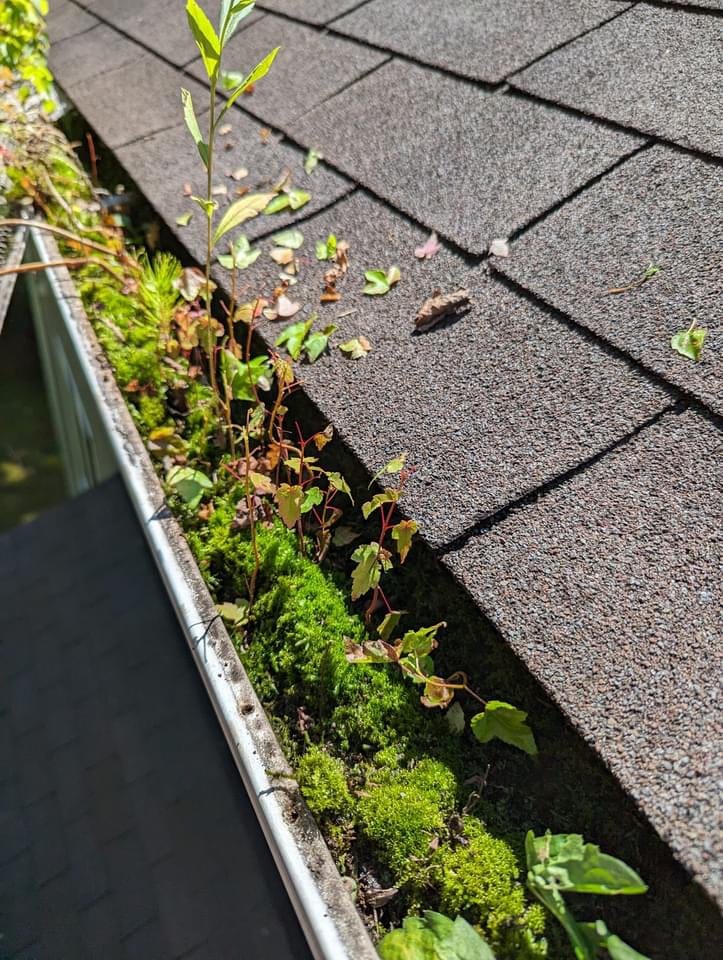
Gutter cleaning is the least interesting item on any home maintenance list. It's also, dollar for dollar, one of the highest-return things you can do to a house — because a gutter is not a decorative trim piece. It is a water management system, and it is the only thing standing between a few thousand gallons of roof runoff and your foundation.
This guide covers what gutter cleaning actually includes, what happens when it doesn't get done, and why Central Texas — Bastrop in particular — is harder on gutters than most of the country.
What gutter cleaning actually includes
The phrase gets used loosely, and not every company means the same thing by it. A complete gutter service should cover:
- Hand-clearing the troughs — physically removing packed debris rather than blowing it around, which just relocates the problem onto your roof and lawn.
- Flushing every downspout — running water through to confirm it actually drains. A clear trough feeding a blocked downspout is still a blocked gutter.
- Checking the pitch — gutters need a slight fall toward the downspout. Sections that have sagged hold standing water even when they're clean.
- Inspecting fasteners and seams — spikes back out, hangers pull loose, and seams separate. These are cheap fixes early and expensive ones late.
- Hauling the debris away — it should leave with the crew, not sit in a pile in your beds.
- A photo report — you can't see your own gutters. Photos are how you actually know what's up there.
If a quote doesn't mention flushing downspouts, ask. Clearing troughs while leaving a packed downspout is the single most common way a gutter cleaning gets done badly.
What actually goes wrong when gutters clog
The failure isn't dramatic. Nothing bursts. Water simply starts going to the wrong places, quietly, for months.
Fascia rot
When a gutter fills, water overflows backward — over the rear lip, down the fascia board the gutter is bolted to. Fascia is usually wood. Wet wood rots, and rotted fascia stops holding fasteners, which means the gutter itself starts pulling away. Now you're paying for carpentry and new gutter, not a cleaning.
Foundation movement
This is the expensive one, and it's specifically a Central Texas problem. Our soils are heavy clay. Clay swells dramatically when it's wet and shrinks when it dries — far more than sandy or loamy soil does. A working gutter system takes roof runoff and carries it away from the house so the soil around the foundation stays at a reasonably even moisture level.
A clogged gutter does the opposite. It concentrates the entire roof's runoff into a few overflow points right at the foundation. That soil swells, then dries out and shrinks in the next Texas summer, and that cycle is exactly what drives foundation movement. Foundation repair in this region routinely runs five figures.
Siding, brick and paint damage
Overflow sheets down the exterior wall instead of running through the downspout. On siding it drives moisture behind the boards. On brick and stone it leaves mineral staining and feeds the algae and mildew growth that then needs soft washing to remove. Painted trim under a chronically overflowing gutter fails years early.
Weight and structural strain
Wet, packed gutter debris is much heavier than people expect — a saturated section can carry well over a hundred pounds. That load hangs off fasteners driven into fascia board, and it slowly pulls them out. Sagging gutters then hold even more standing water, which makes them heavier, which pulls harder. It compounds.
Pests and mosquitoes
Standing water in a gutter is a mosquito nursery running all summer. Damp packed debris also makes an appealing nesting spot for wasps, rodents and squirrels, right at the roofline where they have easy access to the attic.
Why Central Texas is harder on gutters
Most gutter cleaning advice online says twice a year. That advice is written for places where deciduous trees drop their leaves in a predictable autumn window and then stop. That is not how it works here.
Loblolly pines drop year-round
If you're in Bastrop, the Lost Pines, Tahitian Village, or anywhere in the pine belt, this is your main problem. Loblolly pines shed needles continuously rather than seasonally. There is no point in the year when the shedding stops and you're clear until spring.
Pine needles are also uniquely bad gutter debris. They're thin and stiff, so they interlock into a dense mat — think of a felt pad rather than loose leaves. That mat traps everything else that lands on it, holds water like a sponge, and packs into downspout openings where it forms a plug that water can't push through. A gutter under pine canopy can go from flowing to fully blocked in a matter of weeks.
Live oaks don't follow the rules either
Live oaks are evergreen, but they aren't tidy. They shed leaves gradually across the year and then drop catkins and pollen heavily in spring. If you've ever seen a yellow-green film over everything in March, that's the load also going into your gutters. Oak debris breaks down into a fine sludge that packs tight rather than staying loose enough for water to move through.
Pecans add bulk
Pecan trees drop leaves, husks and small limbs. The husks in particular decompose into exactly the rich organic layer that seeds germinate in. Rooted seedlings in a gutter almost always mean pecan or oak overhead.
Then the storms arrive
Central Texas rain doesn't arrive gently. We get long dry stretches and then several inches in a couple of hours. That's the worst possible pattern for a marginal gutter — debris dries and packs solid during the dry spell, then the system has to handle a huge volume all at once. A gutter that seemed fine through months of light rain fails completely in the first real storm.
Practical schedule for this area: three times a year under heavy pine, oak or pecan canopy. Twice a year if your roof is mostly open to the sky. Once a year is not enough for most Bastrop-area homes with mature trees.
The overhanging branch problem
This is the part most homeowners never hear about, and it does real damage on two fronts at once.
Branches that rest on or sweep across a roof are physically abrasive. Every time the wind moves them — which in Central Texas is constantly — they scrub across the shingle surface. Asphalt shingles are protected by a layer of mineral granules embedded in the surface. Those granules are the shingle's armor: they block UV radiation and shield the asphalt underneath from breaking down.
A branch dragging over shingles scrapes those granules loose. Once enough are gone, the asphalt is exposed directly to Texas sun, and it dries out, becomes brittle, and cracks. You lose years off the roof in the spots where branches have been rubbing. If you've ever noticed granules collecting in your gutters or washing out of a downspout, that's shingle surface that is no longer on your roof.
The second problem is simpler: a branch directly over the roofline is a delivery system aimed straight into your gutters. Every needle, leaf, catkin and husk it drops lands on the roof and gets washed into the trough.
Trimming overhanging limbs back off the roof addresses both at once — it stops the abrasion and cuts the debris volume substantially. We trim branches back as part of roof and gutter work for exactly this reason. It's usually the difference between needing three cleanings a year and needing two.
What about gutter guards?
Guards help. They don't eliminate the job, and under pine they help less than the marketing suggests.
Pine needles are thin enough to slip through most mesh, and stiff enough to bridge across screen-style guards and mat on top of them. Fine debris, shingle grit and pollen work through and then compost underneath where you can't see it. Moss will grow directly on top of the mesh. We routinely pull rooted seedlings out of gutters that have guards installed — the guard didn't prevent it, it just hid it.
A guarded gutter under open sky might genuinely be fine on an annual check. A guarded gutter under loblolly pine still needs looking at twice a year.
How to tell yours need attention
- Water sheeting over the front edge during rain instead of running to the downspout
- Plants, moss or seedlings visible above the gutter line
- Staining or streaking on the siding or brick directly beneath the gutter
- A downspout that stays dry during a real downpour
- Sagging or a visible gap between the gutter and the fascia
- Granules collecting in the trough or washing out of the downspout — that's roof, not dirt
- Peeling paint or soft, spongy wood on the fascia board
Any one of these means it's past due. Several together usually mean there's already damage worth looking at closely.
The honest math
Gutter cleaning is inexpensive and boring. Fascia replacement is not. Foundation work is genuinely expensive, and it's the kind of repair that shows up on a disclosure when you sell.
This is one of the clearest cost-avoidance cases in home maintenance: a small recurring expense that prevents a category of large ones. That's the whole argument, and it doesn't need dressing up.
Need this handled?
We’re based in Bastrop and serve Central Texas. Free quotes, usually same day.