
How Often Should You Pressure Wash a Driveway in Central Texas?
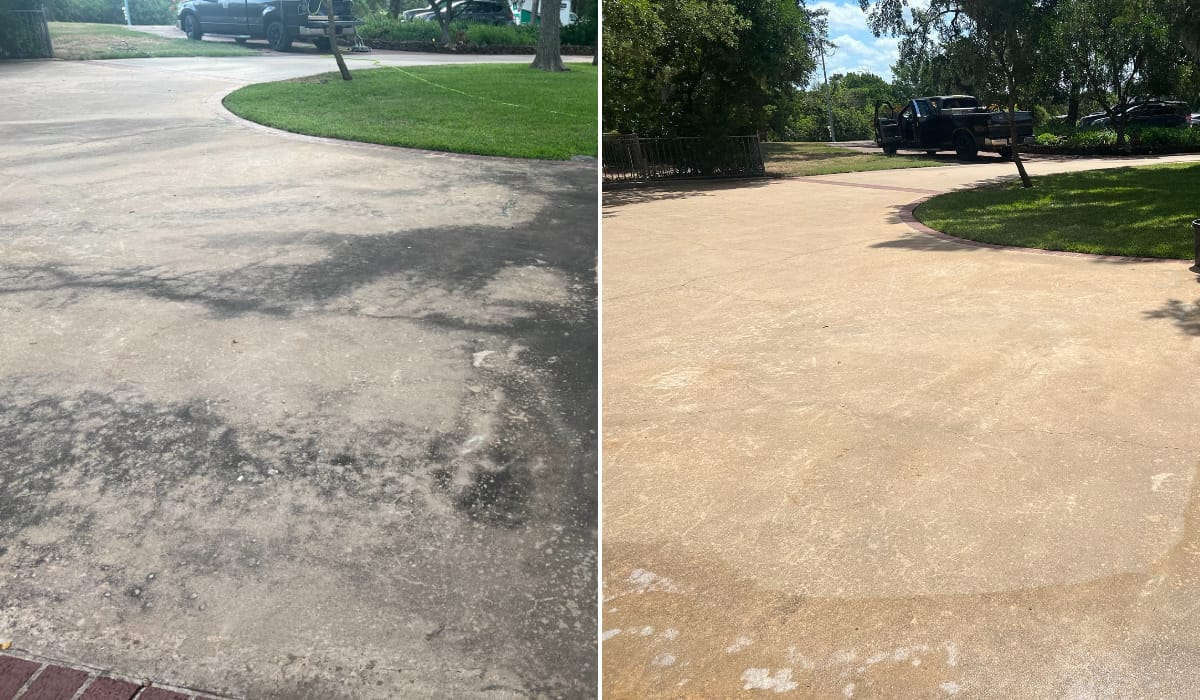
Search this question and you'll get 'once a year' from a site that has no idea where you live. Central Texas is harder on concrete than most of the country, and the honest answer depends on a few things specific to your property.
What stains concrete around here
- Red clay soil. Bastrop County dirt is iron-rich, and iron leaves rust-colored staining on light concrete that gets worse with every rain that splashes it up.
- Tree canopy. Shade keeps concrete damp, and damp concrete grows algae — that's the green-black film that turns a driveway slick after rain.
- Cedar and oak pollen. Spring pollen is heavy here and it bonds into a yellow film that ordinary rain won't lift.
- Heat. Texas sun bakes organic staining into the surface, and the longer it bakes the harder it is to reverse.
- Vehicle drips. Oil and transmission fluid soak into porous concrete and set permanently if they aren't treated.
A realistic schedule
Every 12–18 months — most homes
An open driveway with moderate sun exposure and normal use does well on this cycle. You're cleaning before staining sets rather than after.
Every 9–12 months — heavy shade
If live oak or pine canopy covers your driveway, algae comes back faster and it's a safety issue as much as an appearance one. Algae-covered concrete is genuinely slippery when wet.
Every 6 months — commercial and high-traffic
Storefront entries, walkways and lots pick up foot traffic grime, gum and spills continuously. A twice-yearly schedule keeps them presentable rather than letting them get bad enough that customers notice.
The cheapest driveway to clean is one that gets cleaned on a schedule. Set-in staining takes longer, sometimes needs pre-treatment, and never comes back quite as well as concrete that was never allowed to get that far.
Signs you've waited too long
- Green or black film that gets slick after rain
- A visible clean line where a planter or vehicle has been sitting
- Rust-colored streaks along the edges where soil splashes up
- Dark shadow-like patches under the tree line that don't dry out
None of these are permanent yet. All of them get harder to reverse the longer they sit.
Need this handled?
We’re based in Bastrop and serve Central Texas. Free quotes, usually same day.